Omni

Omni
BI Tools
Bring Omni workbook metadata and lineage into your catalog.
Overview
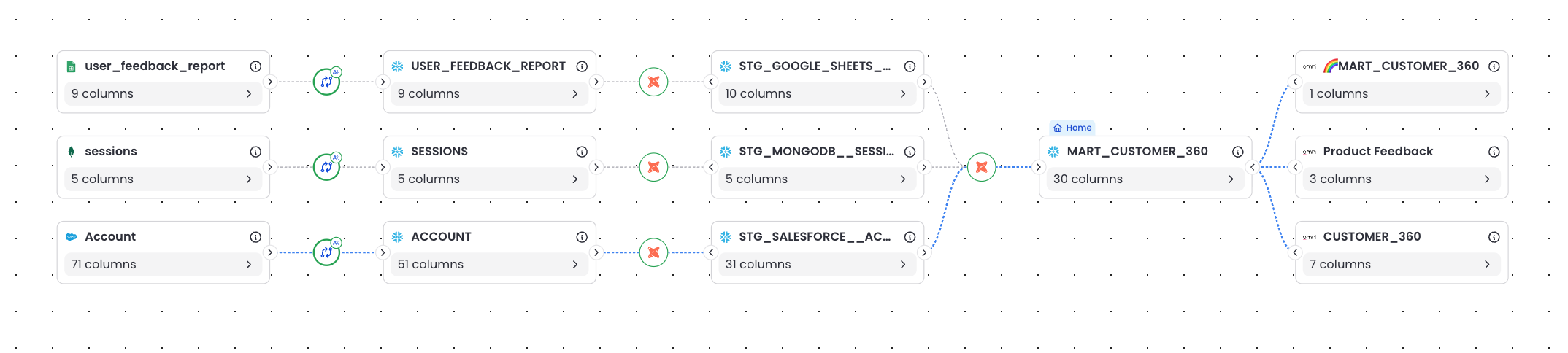
Catalog your Omni documents, dashboards, and query presentations, and trace every field back to the warehouse tables that power them.
Features
| Feature Name | Supported | Notes |
|---|---|---|
| Authentication | ✓ | API Key (Organization Key) |
| Catalog Discovery | ✓ | Documents, Dashboards, Visualizations (query presentations), Fields |
| Table-level Lineage | ✓ | Traces Omni assets to upstream warehouse tables via the semantic model |
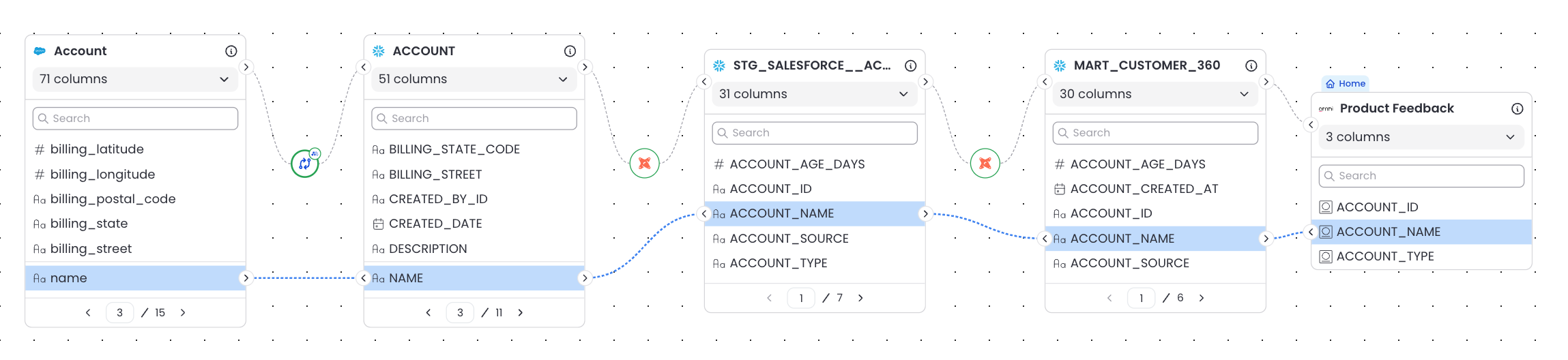
| Column-level Lineage | ✓ | Parses SQL expressions in query presentations to trace fields to warehouse columns |
| Supported Warehouses | ✓ | Snowflake, BigQuery, Databricks |
Prerequisites
Before connecting Omni, you need:
- An Omni account with admin privileges
- A Snowflake, BigQuery, or Databricks asset already connected in Matia — this is required to enable lineage between Omni and your warehouse
The data warehouse connection is a required configuration field. If you haven't connected your warehouse to Matia yet, do that first before setting up the Omni connector.
What Gets Cataloged?
Matia syncs the following Omni objects into your catalog:
| Omni Object | Cataloged as | Notes |
|---|---|---|
| Document | Asset | The top-level container for dashboards and workbooks |
| Dashboard / Workbook | Asset | Published documents and personal explorations |
| Visualization | Asset | Individual query presentations within a document |
| Field / Column | Field | Dimensions and measures resolved from query context |
The resulting lineage chain in Matia runs:
Warehouse Table → Omni Visualization → Document → Query
Column-level lineage narrows this further. When a visualization contains a SQL expression, Matia parses it to link individual fields back to the specific warehouse columns they reference.
Next Steps
- Setup Guide — Connect Omni
- Release Notes — See recent changes